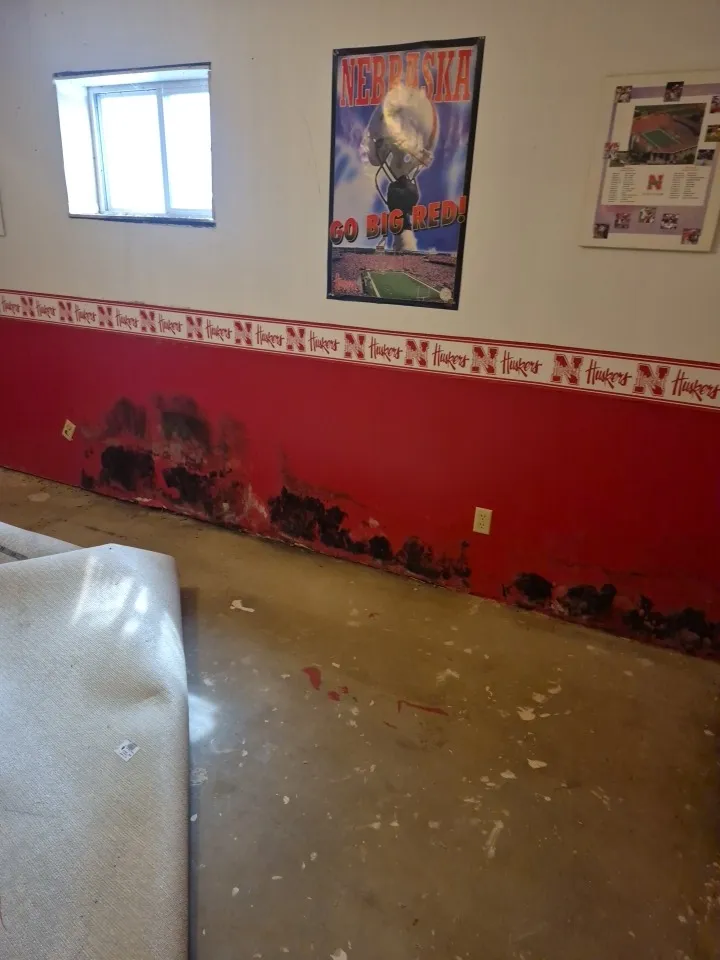
Mold is more than a minor visual nuisance; it is a direct threat to your home’s structural integrity and your family’s respiratory health. In Nebraska’s humid summer months, mold spores can find the perfect environment to settle, grow, and release allergens. Fortunately, mold cannot thrive without one key element: moisture. By understanding humidity limits and controlling hidden water sources, you can stop mold before it ever takes root.
The Science of Mold Growth: The 24-48 Hour Window
Mold spores exist naturally everywhere in the air, both indoors and outdoors. They are completely harmless until they land on a wet surface that contains organic food sources (like drywall, wood, carpet backing, or ceiling tiles).
Once a spore encounters moisture, it can germinate and begin growing roots (called hyphae) in as little as 24 to 48 hours. Once these roots penetrate porous building materials, remediation becomes significantly more difficult, often requiring the complete removal and replacement of the affected drywall or wood.
Key Target: Controlling Indoor Relative Humidity (RH)
The single most effective defense against mold is keeping indoor humidity levels low. Mold requires moisture from the air to grow, even in the absence of standing water.
[!IMPORTANT] The Golden Humidity Range: Homeowners should maintain indoor relative humidity (RH) below 50%, and never allow it to exceed 60%.
How to Monitor and Control Humidity:
- Use a Hygrometer: Place digital humidity monitors (hygrometers) in high-risk areas like basements, kitchens, crawlspaces, and bathrooms.
- Run Dehumidifiers: In subterranean spaces like basements, run a dedicated compressor dehumidifier. Set the auto-shutoff target to 45% RH.
- Optimize Air Conditioning: Your air conditioner acts as a dehumidifier while cooling. Keep your AC fan setting on “AUTO” rather than “ON” to prevent moisture collected on the coils from blowing back into the house.
Ventilation Strategies for High-Risk Areas
Proper airflow prevents stagnant air pockets where moisture accumulates. Pay close attention to these structural areas:
1. Bathrooms
Always run the exhaust fan during showers and leave it running for at least 20 minutes afterward. If your fan is old, check its airflow capability (measured in CFM - Cubic Feet per Minute) to ensure it is strong enough to evacuate moisture.
2. Kitchens
Cook with the range hood fan turned on, especially when boiling water. Ensure your range hood vents outdoors rather than just recirculating air back into the kitchen.
3. Attics and Crawlspaces
Attic ventilation is critical. Ensure soffit, ridge, and gable vents are completely clear of insulation. For crawlspaces, ensure they are fully sealed with a heavy-duty vapor barrier (at least 6-mil polyethylene plastic) covering 100% of the soil.
Checklist for Hidden Moisture Detection
Oftentimes, mold grows invisibly behind walls or under flooring due to slow, hidden leaks. Add these checks to your regular home maintenance routine:
- Inspect Appliance Hoses: Regularly check the water connections behind your refrigerator ice maker, washing machine, and dishwasher.
- Monitor the Water Meter: Turn off all taps in the house and check your water meter. If the dial is still spinning, you have a hidden leak.
- Watch for Wall Bubbling: Peeling paint, bubbling drywall, or musty smells are immediate indicators of moisture behind the wall cavity.
By maintaining strict humidity limits and addressing structural moisture issues instantly, you protect your Nebraska home from structural rot and maintain a healthy, mold-free environment.