On that first chilly autumn evening in South Central Nebraska, thousands of homeowners walk over to their thermostats and switch the system from “COOL” to “HEAT.” Within twenty minutes, a familiar, slightly alarming odor begins drifting through the supply vents: the distinct smell of burning dust.
For many families, this triggers immediate concern: Is my furnace catching fire? Is this dangerous to breathe? Why does it smell every single fall?
While a mild burning odor is very common during seasonal startup, what is actually happening inside your HVAC system—and what is blowing through your air ducts—deserves a closer look. Here is the science behind the fall furnace smell, how to distinguish normal startup from a safety hazard, and why autumn is the most strategic time to have your air ducts professionally cleaned.
Why Does My Furnace Smell Like Burning Dust?
During the humid Nebraska summer, your furnace’s heating components sit idle for months. While your central air conditioner runs continuously, microscopic airborne particles—household dust, pet dander, sloughed skin cells, and outdoor pollen—settle inside your ductwork and directly onto the furnace’s heat exchanger, burner assemblies, and electric heating coils.
When the furnace ignites for the first time in the fall, those heating elements quickly reach temperatures between 140°F and 170°F (and even higher on electric heat strips).
That sudden heat incinerates the layer of settled organic dust almost instantly. What you smell is the literal combustion of summer particulate being vaporized and blown directly into your living spaces, bedrooms, and home office.
Normal Burn-Off vs. Dangerous Warning Signs
In most cases, the initial burning smell should dissipate within 30 to 60 minutes of continuous operation as the accumulated dust burns away. However, you should never ignore odors that linger or smell different from basic dust.
Here is how to tell the difference:
1. Normal: Faint Dust or “Dry Heat” Odor
- Duration: 30 to 60 minutes after the first cycle.
- What to do: Open a few windows for 15 minutes to ventilate the living area. Replace your standard furnace air filter with a fresh, high-efficiency pleated filter.
2. Warning: Sharp Electrical or Plastic Smell
- Indication: Overheating blower motor bearings, melting wire insulation, or a failing capacitor.
- What to do: Shut off the furnace at the thermostat or breaker immediately and call a certified HVAC technician.
3. Warning: Rotten Eggs or Sulfur Smell
- Indication: A natural gas leak. (Utility providers add mercaptan to give odorless gas this signature sulfur scent).
- What to do: Evacuate the house immediately. Do not flip light switches, use phones inside, or light matches. Call your gas provider or emergency services from outside.
4. Warning: Heavy Smoke, Soot, or Oily Odor (“Puff-Back”)
- Indication: Incomplete combustion or burner misfiring in oil- or gas-forced air furnaces.
- What to do: Shut off the unit. An oil puff-back can coat your walls, ceilings, and carpets in sticky, acidic soot that requires professional fire and soot restoration.
The Hidden Culprit: What’s Recirculating in Your Ductwork?
While the initial dust burns off the heat exchanger, the rest of your ductwork remains lined with years of settled debris.
In fall and winter, our homes are sealed tight to conserve heat. According to the EPA, indoor air pollutant levels can be two to five times higher than outdoor air. When your blower fan runs throughout the winter, that air repeatedly cycles through your supply and return vents:
- Pet Hair & Dander: Heavy dander traps inside horizontal duct runs, serving as a food source for dust mites.
- Summer Pollen & Mold Spores: Tree, weed, and agricultural pollens pulled in during summer ventilation settle in duct elbows and drop into living areas whenever air pressure shifts.
- Drywall & Renovation Dust: If you completed any summer remodeling, sanding dust frequently bypasses basic return filters and settles deep inside the plenum.
For family members with asthma, seasonal allergies, or respiratory sensitivity, breathing trapped, recirculated air all winter leads to chronic morning congestion, dry coughs, and irritated eyes.
[!NOTE] Furnace Efficiency & Energy Bills: When dust and lint blanket your furnace blower wheel and internal duct trunk lines, system static pressure increases. Your blower motor must work harder and run longer cycles to push heated air into distant rooms, accelerating mechanical wear and driving up monthly utility bills.
The Professional Duct Cleaning Process
Effective duct cleaning is not simply sticking a shop vac into a vent register. Doing so often stirs up settled allergens without actually removing them, worsening indoor air quality.
At Yellow Van Cleaning & Restoration, our trained technicians follow industry-leading standards to fully decontaminate your duct system:
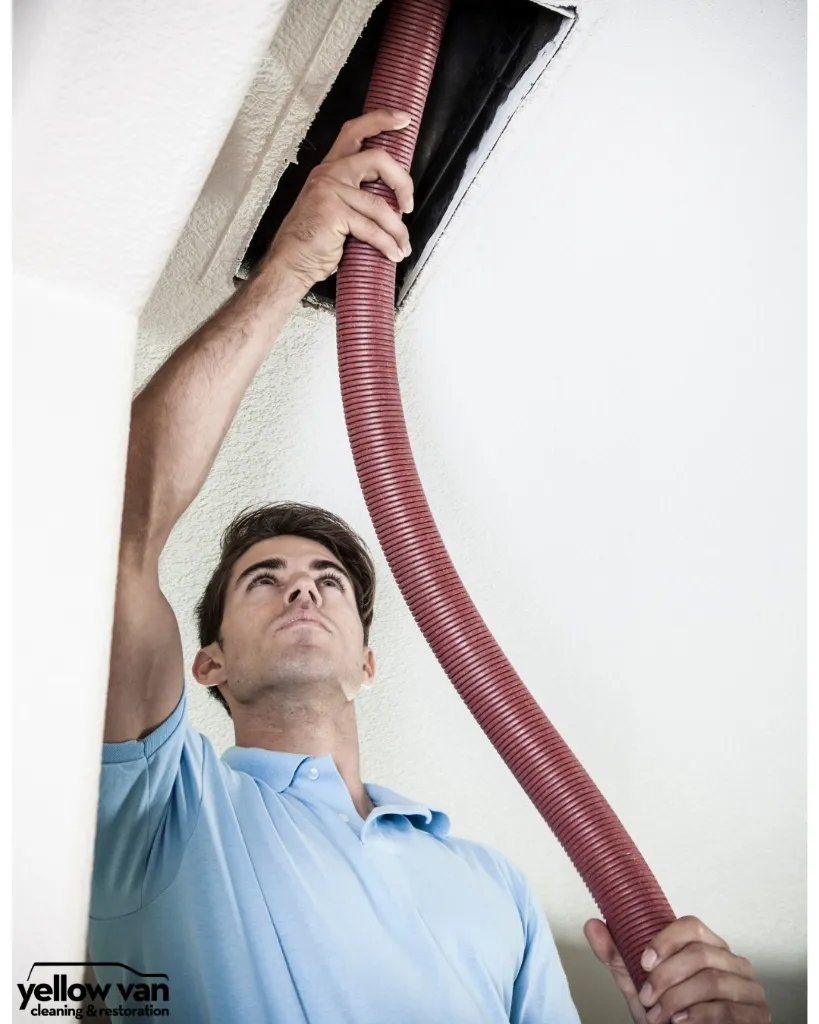
- Negative Air Containment: We connect an industrial, high-powered vacuum collection unit to your main duct trunk, putting the entire system under intense negative pressure.
- High-Velocity Agitation: We insert specialized mechanical agitation whips and rotary brushes into each individual supply and return register. These tools scrub the interior metal walls, dislodging stubborn dust, cobwebs, and debris.
- Air Sweeping to the Vacuum: The negative airflow pulls all dislodged contaminants straight into our HEPA filtration containment system outside your living area—preventing any dust from escaping into your rooms.
- Register & Component Inspection: We clean vent grilles, inspect plenums, and ensure airflow is clean and unrestricted before your winter heating cycle ramps up.
Schedule Your Fall Duct Cleaning with Yellow Van
Don’t spend the upcoming Nebraska winter breathing last summer’s dust and allergens. A professional fall duct cleaning refreshes your indoor environment, extends the life of your furnace, and ensures your home stays clean, healthy, and warm.
Serving Kearney, Grand Island, Hastings, and South Central Nebraska, our team is ready to help your family breathe easier. Call Yellow Van Cleaning & Restoration today at (800) 828-3969 or request service online to schedule your fall air duct cleaning.