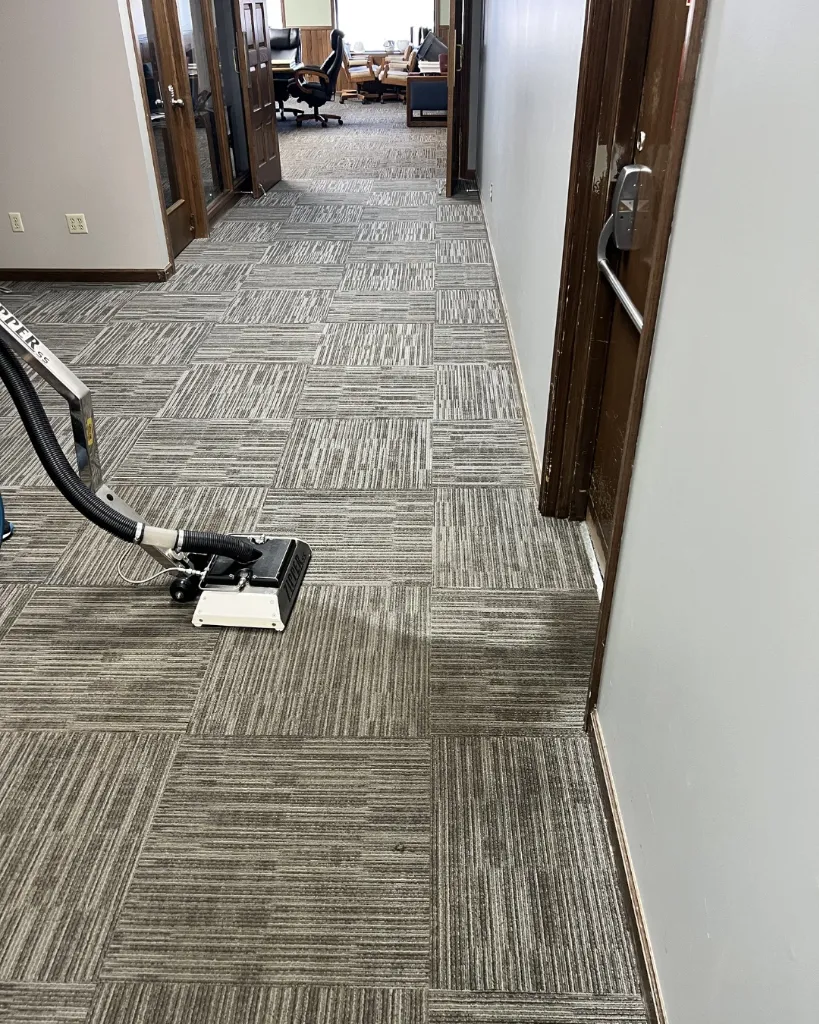
Carpet is a significant financial investment in your home, adding comfort, warmth, and sound insulation. However, many homeowners wait until their carpets look visibly soiled before scheduling a professional cleaning. By that time, permanent structural damage to the carpet fibers has already occurred.
Understanding the physics of carpet wear and deep cleaning can help you extend the life of your flooring and protect your investment.
The Physics of Carpet Damage: The Abrasive Soil Cycle
The most dangerous soil in your carpet is not the visible surface stains. It is the microscopic, sharp-edged particles of sand, grit, and outdoor dirt that settle deep into the base of the carpet fibers.
graph TD
  A["Grit & Sand Trapped at Fiber Base"] --> B["Foot Traffic & Compression"]
  B --> C["Abrasive Friction (Like Sandpaper)"]
  C --> D["Fibers Are Cut/Scuffed"]
  D --> E["Loss of Carpet Resiliency & Visual Matting"]
  E --> F["Permanent Wear Patterns"]
When you walk on carpet that contains trapped grit, the friction acts like sandpaper. With every step, these sharp sand particles compress against the delicate nylon or polyester yarns, scuffing the fiber walls and cutting individual strands.
Once fibers are scuffed, they lose their circular shape and their ability to reflect light. This is why high-traffic hallways develop “dark lanes” or dull paths. This is not dirt; it is permanent light-refraction damage caused by fiber scuffing. Vacuuming removes loose surface soil but cannot lift the deep-set, heavy grit embedded at the bottom of the backing.
The Physics of Hot Water Extraction (HWE)
Commonly known as “steam cleaning,” Hot Water Extraction (HWE) is the gold standard for deep carpet maintenance. It relies on a balanced equation of Temperature, Chemistry, Pressure, and Extraction Power.
- High Temperature (The Heat Factor): Yellow Van’s truck-mounted units heat water to 200°F–220°F. High heat breaks down oily binders (like skin oils, cooking grease, and pet soils) that hold dirt to the carpet fibers, reducing the need for harsh chemical detergents.
- Pre-Spray Chemistry: A mild pre-conditioning agent is sprayed onto the carpet to loosen soil particles from the synthetic fibers, binding them so they can be easily rinsed away.
- High-Pressure Rinse & Agitation: Hot water is injected into the carpet pile under high pressure (usually 300-400 PSI). This breaks up the compacted grit at the base of the backing.
- Sub-Surface Extraction (Suction Power): The most critical step. Powerful truck-mounted vacuum systems instantly pull the water, dissolved soils, and abrasive grit out of the carpet. This leaves the fibers clean, residue-free, and damp-dry, preventing rapid re-soiling.
Preserving Your Manufacturer’s Warranty
If you purchased new carpet recently, it likely came with a 10-to-20-year wear and stain warranty. However, many homeowners do not realize that these warranties have strict maintenance requirements.
[!IMPORTANT] Warranty Compliance: Almost all major carpet manufacturers (such as Shaw, Mohawk, and carpet fiber brands like Stainmaster) require you to have your carpets professionally cleaned using Hot Water Extraction (HWE) at least once every 12 to 18 months.
To preserve your warranty, you must keep:
- Detailed receipts of professional cleaning sessions.
- Proof that the service provider used IICRC-certified cleaning procedures (the standards followed by Yellow Van).
Regular deep cleaning isn’t just about removing surface spots. It is a proactive maintenance routine that protects fibers from abrasive scuffing, maintains indoor air quality by extracting allergens, and keeps your manufacturer’s warranty fully intact.